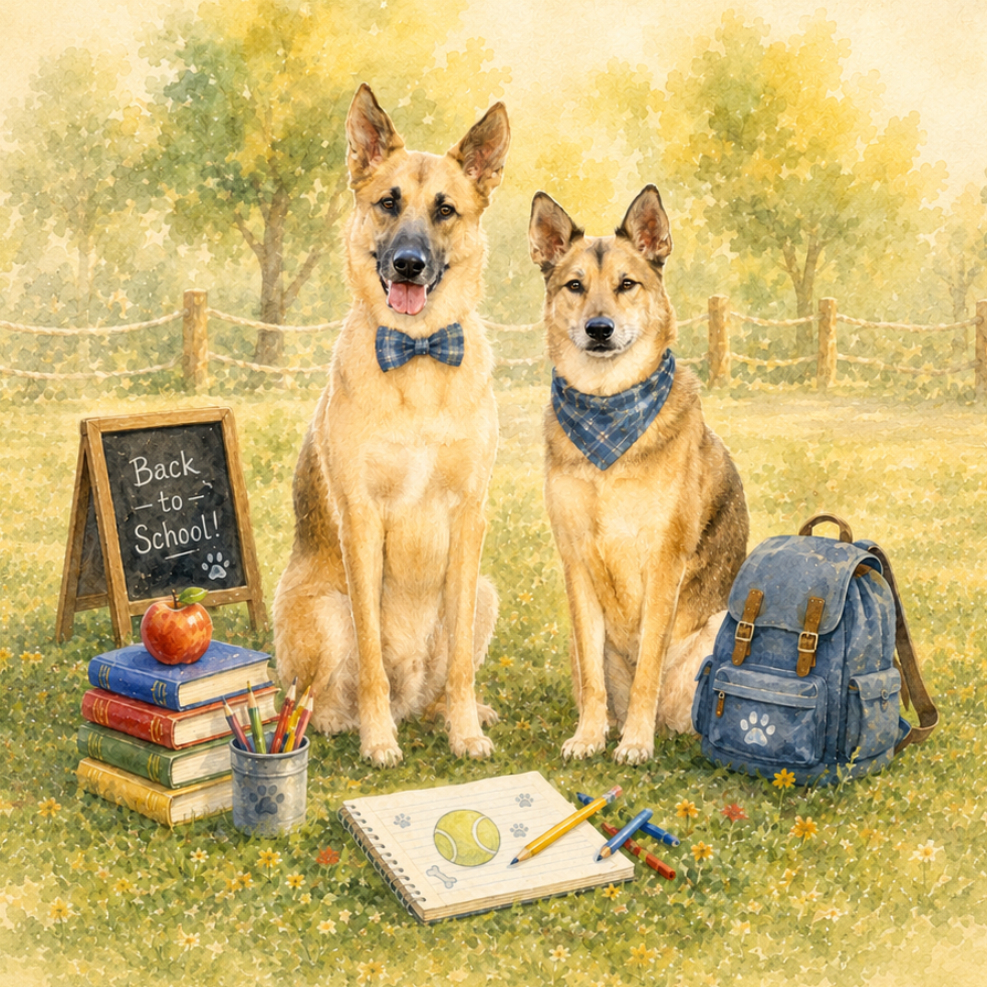
August has arrived with backpacks, school traffic, forgotten lunchboxes, and dogs discovering that the household’s summer staffing department has suddenly disappeared.
Some dogs stretch out on the sofa and begin their important daytime work of moving from one warm spot to another.
Others pace, bark, scratch at doors, refuse food, have accidents, or perform an unauthorized renovation of the couch.
This does not automatically mean “separation anxiety.” Dogs can struggle alone because of fear, panic, frustration, outside noises, or simply because they have not learned how to settle without company. One eaten shoe is evidence of poor shoe security, not a complete diagnosis.
Research has linked changes in alone time with separation-related behavior. That makes August a good time to prepare before everyone’s schedule changes overnight.
Your back-to-school plan:
- Practice very short absences while your dog is relaxed. Start with seconds or minutes, not an ambitious afternoon expedition.
- Use a camera. A dog who seems peaceful when you return may have spent 45 minutes pacing before collapsing from emotional overtime.
- Keep meals, walks, rest, and enrichment as predictable as possible.
- Return before your dog becomes distressed. Panic is not a useful practice exercise.
- Get qualified help if your dog cannot eat, settle, or recover during short absences.
A frozen food toy can help, but it is not emotional duct tape. If your dog abandons it as soon as you leave, that is useful information.
Research for curious humans:
https://pmc.ncbi.nlm.nih.gov/articles/PMC8868415/
🧠🚧 The Adolescent Brain Is Currently Under Construction
Does your young dog suddenly look at a familiar cue as though you have begun speaking medieval Latin?
You say, “Come!” Your dog checks the wind, consults legal counsel, and continues investigating a leaf.
This may feel personal. It probably is not.
Research suggests that dogs can go through a temporary adolescent phase when they become less responsive to their familiar caregiver. An adult-sized body does not contain a fully adult brain. The brakes are still being installed, and several important wires are apparently loose behind the dashboard.
Adolescent dogs often need extra help with excitement, frustration, distractions, and recovery. They do not need harsher corrections because their nervous system is having a growth spurt.
Keep training short. Make the correct choice easy. Reward generously. Lower the difficulty when your dog starts falling apart.
Continue providing safe sniffing, chewing, play, rest, exploration, and choice. These experiences help young dogs develop into steadier adults.
Your adolescent dog is not trying to take control of the household.
They are trying to remember why they entered the kitchen.
Research for fellow behavior nerds:
https://pmc.ncbi.nlm.nih.gov/articles/PMC7280042/
🎓🦴 School Is Also Back In Session For The Dogs
A new round of my in-person group classes begins Monday, August 17, at the San Diego Humane Society’s San Diego Campus.
5:00 PM: Marvelous Manners
For dogs who can sit beautifully in the kitchen but appear to lose their entire education when the front door opens.
We will practice attention, leash manners, polite greetings, recall, settling, waiting, and other skills that make everyday life easier. The goal is not to remove your dog’s personality. The goal is to make living with that personality slightly less athletic.
6:30 PM: Awesome Adolescence
For teenage dogs with long legs, large opinions, and an impulse-control department operating with two interns and a broken printer.
We will build focus, communication, confidence, and practical skills while helping humans understand what is happening inside that rapidly changing brain.
Both classes use kind, modern, reward-based training. No intimidation, no painful equipment, and no expectation that your dog arrive as an honors student.
Class details and registration:
https://www.sdhumane.org/services/pet-training/group-training-classes/

🦯🐶 Blind Dogs Are Still Very Much Dogs
August 23 is International Blind Dog Day.
This day celebrates dogs who are blind or visually impaired. It is different from International Guide Dog Day, which honors dogs trained to assist blind and low-vision people.
Blind dogs are not broken dogs.
They still want to sniff, learn, play, explore, roll in questionable substances, and monitor your sandwich. Sight is one sense. It is not the entire dog.
Any new vision change should be checked by a veterinarian. Once medical needs have been addressed, thoughtful training and management can help dogs adjust and continue enjoying full, interesting lives.
A few ways to support a blind dog:
- Keep the map predictable. Avoid surprise furniture revolutions. When something must move, guide your dog through the new layout.
- Teach clear verbal cues. Words such as “wait,” “step up,” “step down,” “careful,” and “touch” can help your dog navigate safely.
- Announce yourself. Say your dog’s name or make a gentle sound before touching them, especially while they are resting. Nobody enjoys waking up because a mysterious hand has appeared from the universe.
- Create landmarks. Rugs, mats, and different floor textures can help identify doorways, beds, food stations, and safe routes.
- Protect real hazards. Use barriers around pools, open stairs, sharp edges, and unsafe drop-offs. Keep blind dogs leashed outside unfenced areas.
- Keep training. Blind dogs can learn through shaping, food rewards, sound markers, scent, touch, and carefully taught verbal information.
Do not carry them everywhere. Safe problem-solving helps build confidence. A blind dog needs support, not a full-time helicopter parent hovering six inches above the floor with a clipboard.
Helpful resources to save and share:
Living And Learning With A Blind Dog, IAABC Foundation
Tips For Living With A Blind Dog, Blind Dog Rescue Alliance
Helping Pets Adapt To Vision Loss, Fear Free Happy Homes
🎉🐕 National Dog Day, Their Way
Blind, sighted, young, old, social, cautious, energetic, or deeply committed to sleeping until noon, dogs do best when we pay attention to the individual in front of us.
That brings us to National Dog Day on August 26.
Your dog may already believe this holiday occurs every morning, but the date is still a useful reminder to celebrate them in a way they actually enjoy.
That may be a slow sniff walk, a favorite game, a quiet beach trip, a cardboard box to destroy, a food puzzle, or an uninterrupted nap in the center of your clean laundry.
A crowded brewery patio is not automatically a gift. Neither is being hugged by seven visiting children while wearing a festive hat.
Good enrichment is chosen for the dog in front of you, not for the photograph you hoped to post afterward.
Some dogs want to attend the party.
Some dogs want everyone to leave the party.
Both are doing doghood correctly.
🌈🐾 For The Ones We Still Carry
Paying attention to the dog in front of us also means remembering that our time with them is never long enough.
August 28 is Rainbow Bridge Remembrance Day.
For everyone missing an animal who once filled the house with footsteps, fur, routines, noise, comfort, and love, this day is for remembering them.
The dogs we lose remain part of how we care for the dogs who come next. They teach us better timing, more patience, softer expectations, and the importance of noticing the ordinary moments while they are still happening.
Some leave us with better training skills.
Some leave us with more compassion.
Some leave us unable to eat cheese without remembering that we were always being watched.
Their beds may be gone. Their leashes may no longer hang by the door.
They are still part of the story.

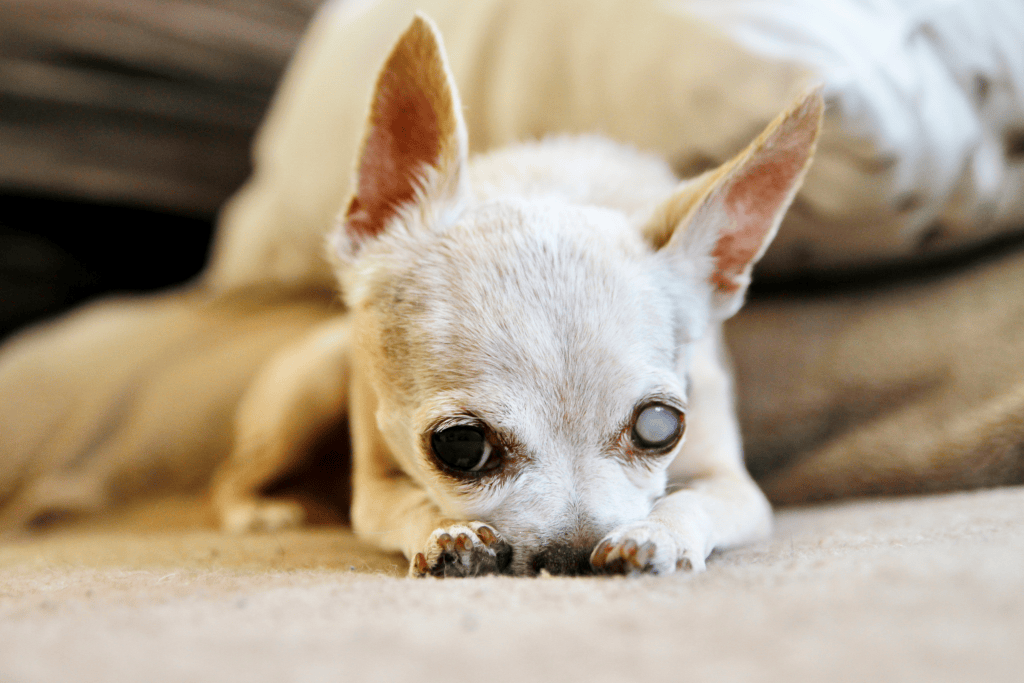


Lou Bear: Tiny Dog, Enormous Retirement Plans
Over the years, I’ve had to say goodbye to several deeply loved animals, and every one of them remains part of me forever. For this Rainbow Bridge remembrance, I’m honoring Lou Bear.
I adopted her from the San Diego Humane Society when she was already 14-plus years young and fully prepared to rule her retirement like a tiny, slightly lawless queen. She stole the big dogs’ Nylabones, strutted in her little serape coat, fiercely loved her squeaky bear, cuddled with Pollux and the cats, joined us on nature walks, and claimed every available human lap.
Lou Bear left us on June 22, 2017. It still hurts like it was yesterday. She may have been one tiny chapter in a lifetime filled with beloved animals, but she left a permanent, Chihuahua-sized paw print on my heart.
🌻🐾 Until September
August brings change.
Schedules shift. Young dogs grow up. Older dogs adapt. Families return to routines, and dogs try to understand why breakfast has moved by eleven minutes without a formal household vote.
Whether we are teaching a dog to stay home alone, walk politely, navigate without sight, or simply feel safer in the world, the basic job is the same:
Give clear information. Keep the challenge manageable. Notice progress. Support the dog in front of you.
And when your dog spends an unreasonable amount of time studying one blade of grass, remember that the neighborhood news has been unusually active lately.
Kindly,
Leave a Reply